
KYCIS TECHNICAL BLOG
Engineering Insights
Technical articles on dew point calculation, PVT analysis, and oil & gas software engineering — written by the KYCIS team.
-
Gas-Liquid GC Recombination Checklist for PVT Labs
A recombined wellstream composition is not created by placing a gas table beside a liquid table. The result depends on accepted GC compositions, compatible component identities, the project gas-oil ratio (GOR), and the oil-density basis. A small input or mapping error can affect every downstream mole fraction even when both chromatograms were accepted correctly. This…
-
How to Turn Chromperfect ZED Files into Reviewable Liquid GC Reports
Chromatography software can produce an accepted liquid-GC result, but that result is often only the start of a PVT lab deliverable. Before it reaches an engineer or external client, the lab may still need to normalize the composition, apply the agreed internal-standard assumptions, check component names, combine liquid and gas results, and present the outcome…
-
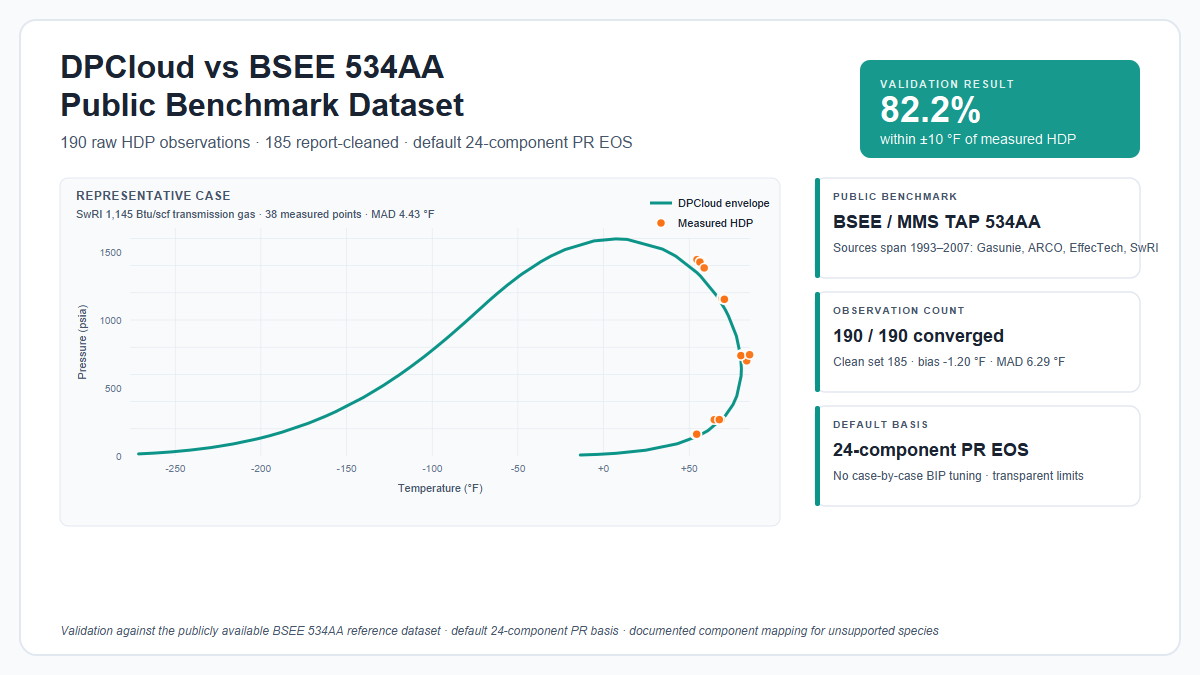
Validating DPCloud Against the BSEE 534AA Public Dew-Point Benchmark
A public benchmark is more useful than a perfect-looking number Hydrocarbon dew-point validation is most useful when the data can be inspected. Private lab comparisons are valuable for project work, but a public benchmark adds a different kind of discipline: readers can see the source, understand the assumptions, and decide whether the comparison is relevant…
-
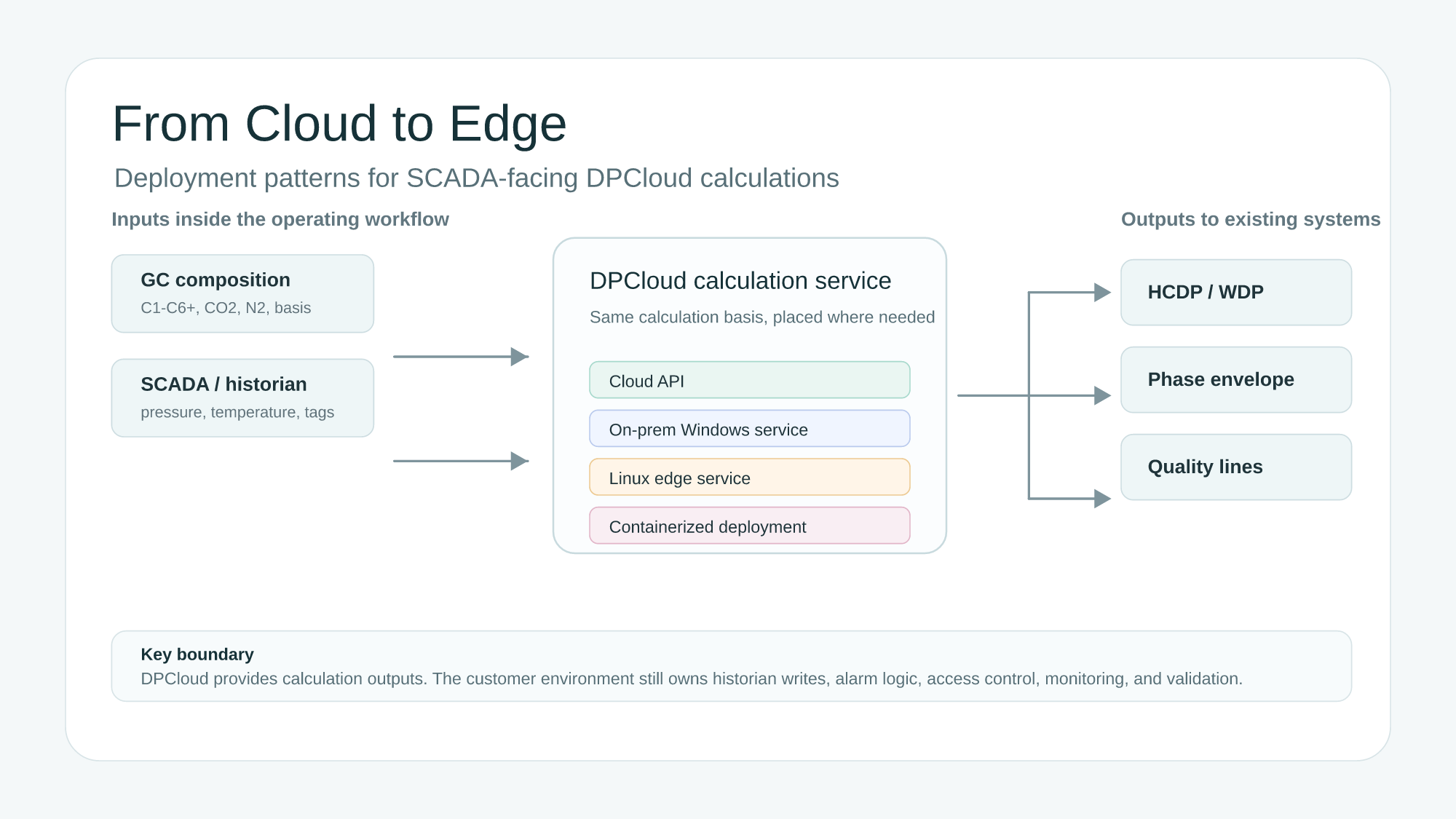
From Cloud to Edge: SCADA Dew Point Calculation Deployment with DPCloud
A SCADA dew point calculation is not only a thermodynamic problem. It is also a deployment problem. Pipeline operators need to know where the calculation runs, which data crosses a network boundary, who owns the service, and how the result becomes part of an operating workflow. That is why DPCloud should not be described as…
-
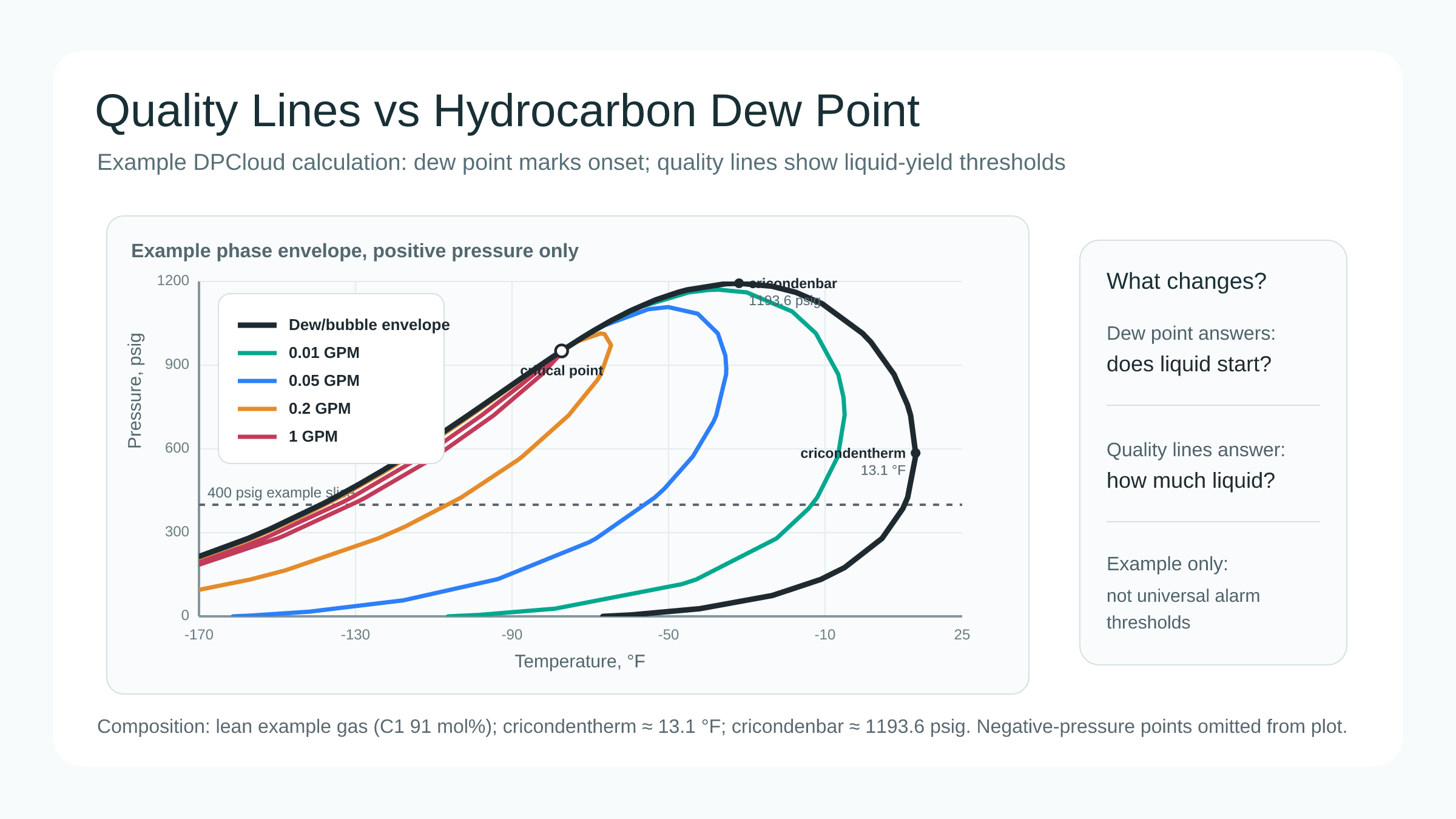
Quality Lines vs Hydrocarbon Dew Point: When “How Much Liquid” Matters More Than “Whether Liquid Starts”
Dew point is an onset line, not a liquid-volume answer Hydrocarbon dew point is often treated as the central number in natural-gas phase behavior. That is reasonable, but incomplete. A dew-point temperature tells an operator when the first hydrocarbon liquid starts to form at a stated pressure. It does not tell the operator how much…
-
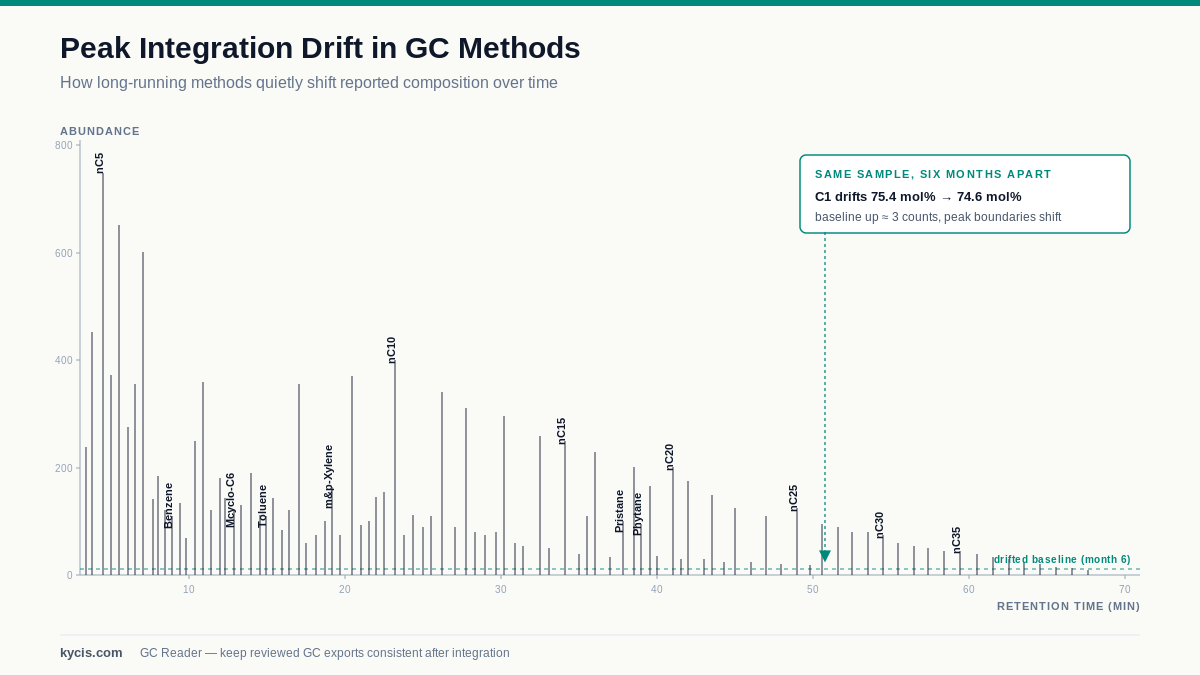
Peak Integration Drift: Why Composition Results Keep Changing
Peak integration drift is one of the quieter ways GC composition results move over time. The chromatogram may still look acceptable, and the method may still export a valid CSV, but small changes in baseline treatment, integration thresholds, retention windows, or manual review habits can alter reported peak areas enough to affect final composition values.…
-
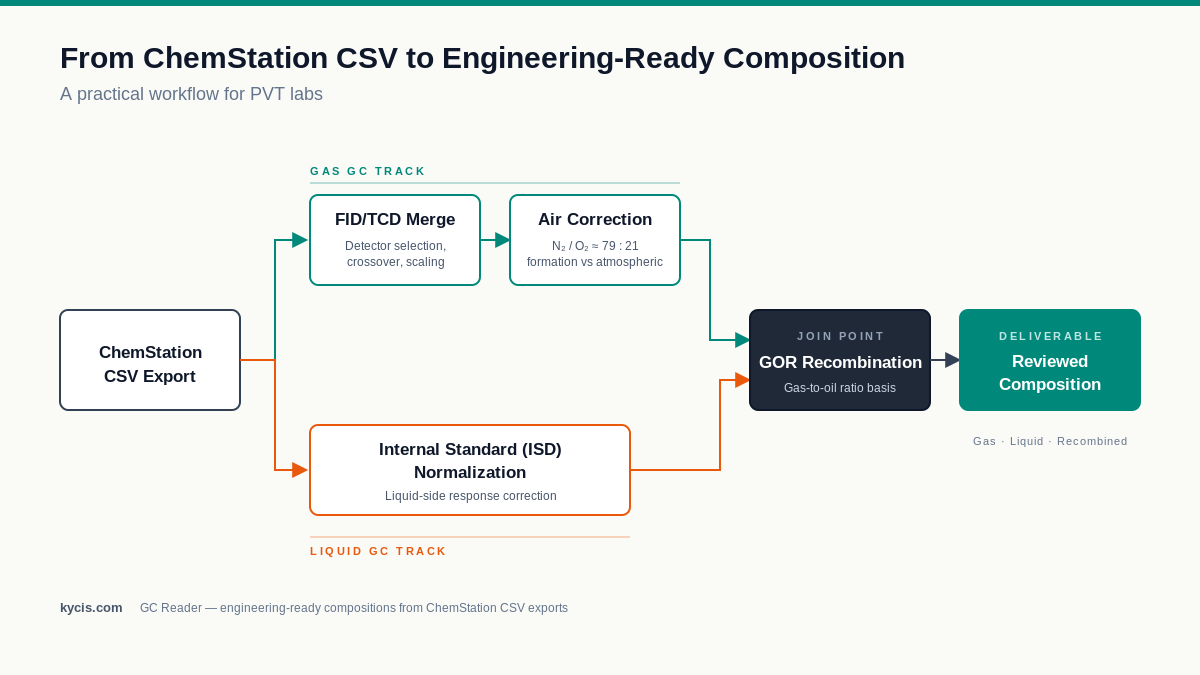
From ChemStation CSV to Engineering-Ready Composition: A Practical Workflow for PVT Labs
A ChemStation CSV export is a starting point, not a finished engineering composition. It may contain detector output, component names, peak areas, sample identifiers, report-template headers, and method-specific formatting. But by itself, it is not yet a composition that can be handed to a PVT report, EOS model, reservoir engineer, or client without review. The…
-
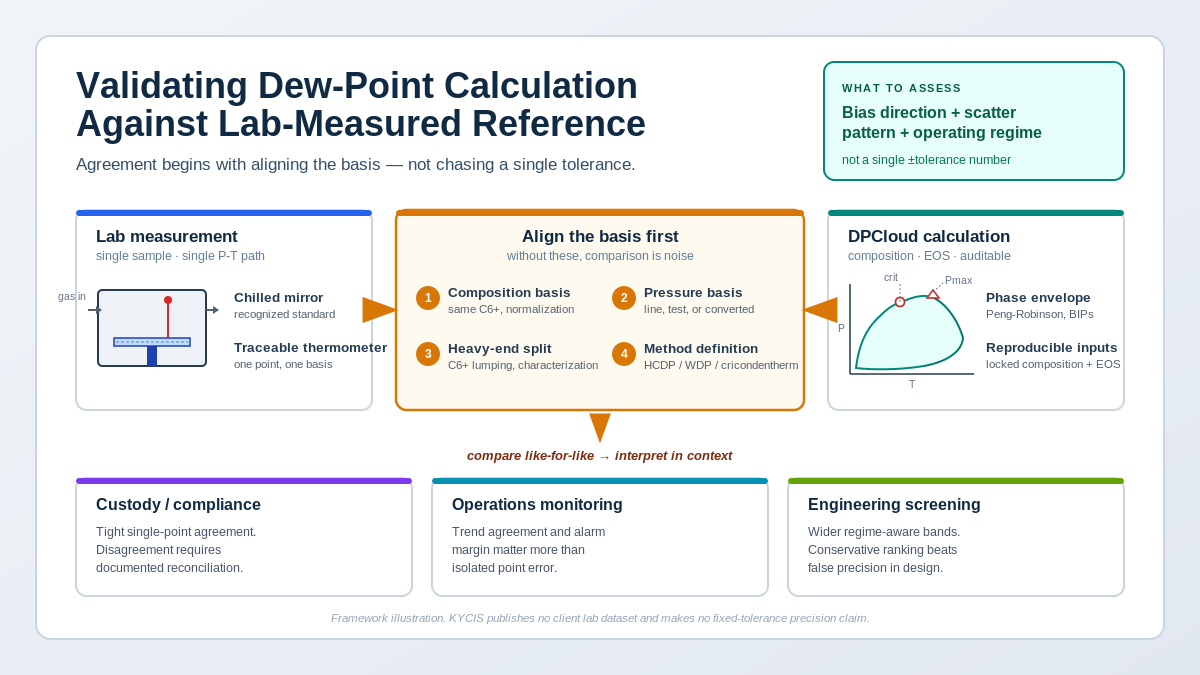
Validating DPCloud Against Lab-Measured Dew Points: What Agreement Really Means
Validation is not a single accuracy number Hydrocarbon dew-point software should not be trusted because a result looks plausible. It should be trusted because the calculation basis can be compared against measured data in a controlled way. For pipeline gas-quality teams, that distinction matters. A dew-point number may influence operating margin, winter risk screening, compressor…
-
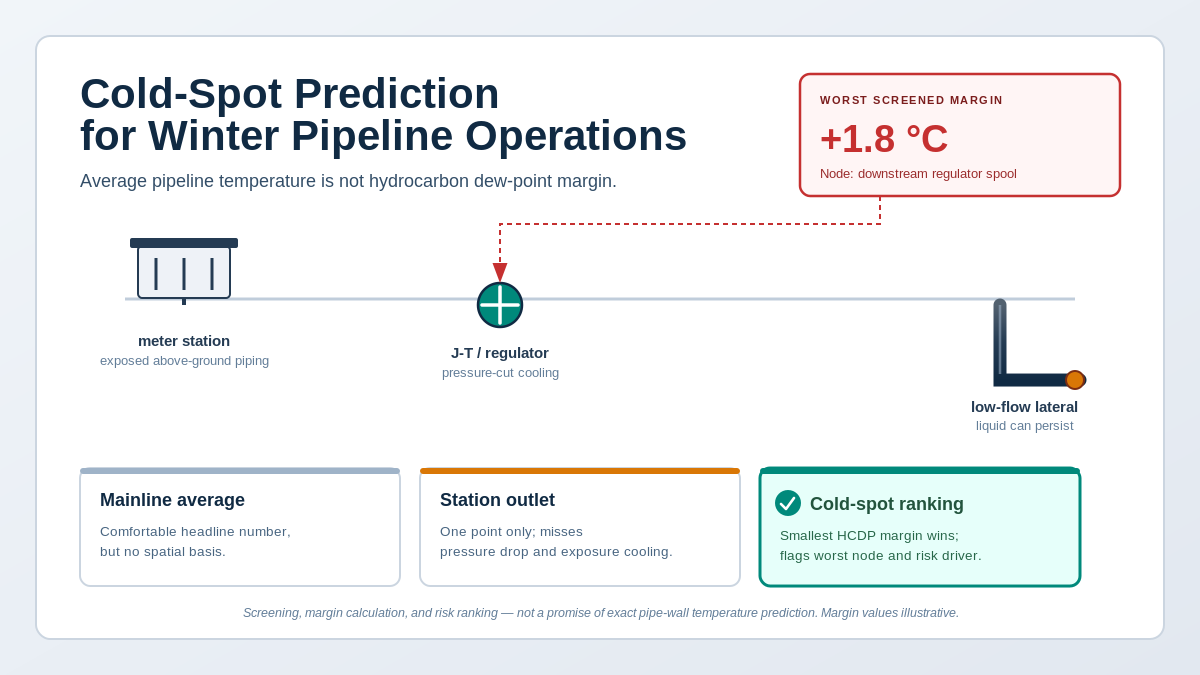
Cold-Spot Prediction: Why Average Pipeline Temperature Is Not Hydrocarbon Dew-Point Margin
Average temperature is not the winter risk Winter dew-point management often starts with a simple question: is the pipeline gas warm enough to stay above its hydrocarbon dew point? That question is useful, but it is incomplete. The number that matters operationally is not the average pipeline temperature. It is not always the station outlet…
-
Oil & Gas Software Outsourcing: What to Look for in a Petroleum Software Development Partner
Choosing an oil and gas software development partner is a high-stakes decision. This guide covers the key technical and commercial criteria for evaluating petroleum software outsourcing vendors — from thermodynamic domain expertise to SCADA integration experience and IP protection.
-
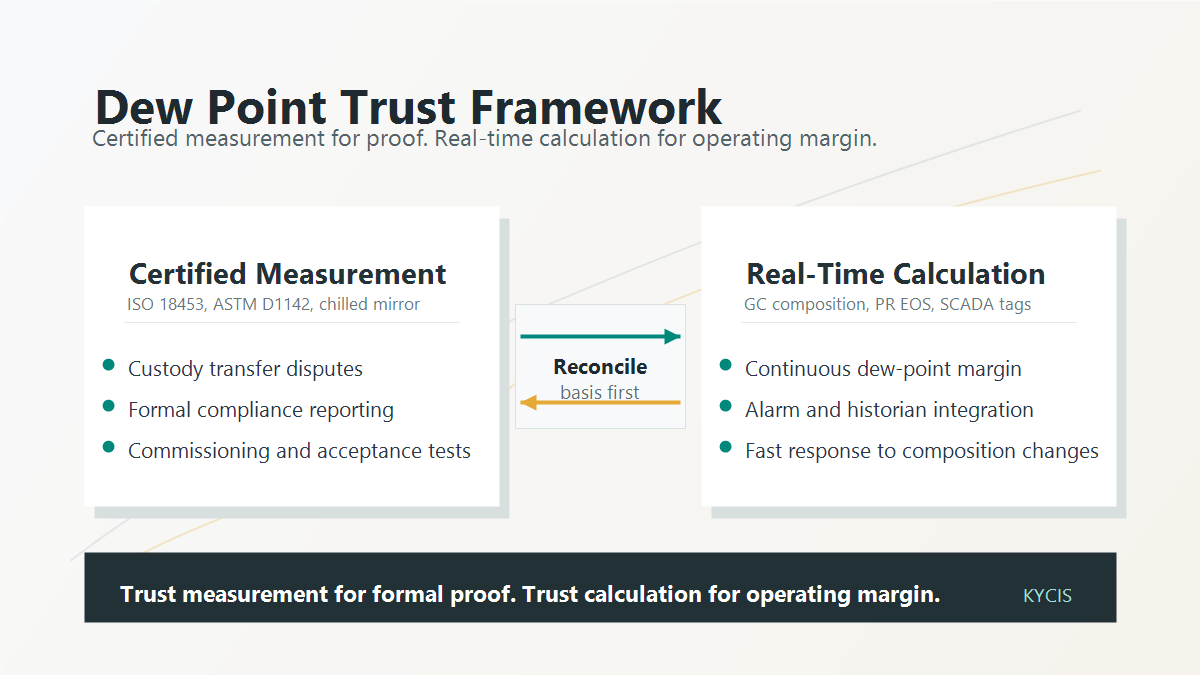
Dew Point Measurement vs Real-Time Calculation: ISO 18453, Chilled Mirrors, and When to Trust Which
A practical framework for when to trust certified dew-point measurement, ISO 18453 correlation, chilled-mirror results, or real-time Peng-Robinson calculation in pipeline gas-quality decisions.
-
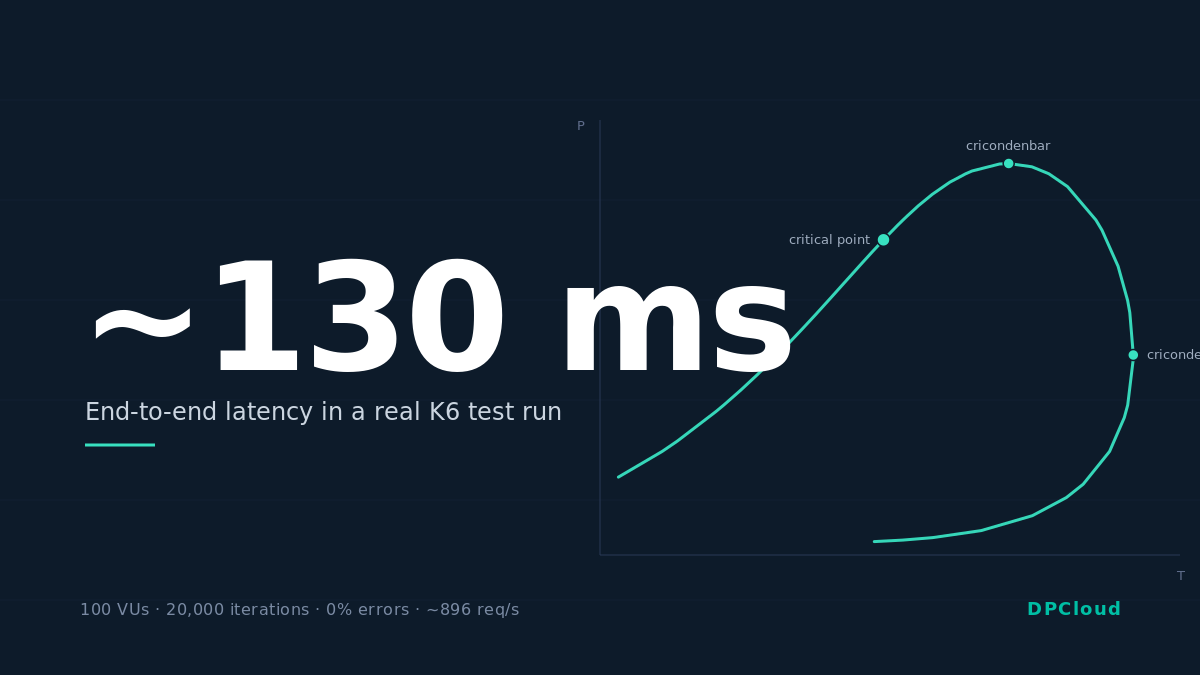
Sub-150 ms Dew Point Calculations: How DPCloud Combines Speed With Numerical Robustness
Inside the engineering choices that let DPCloud run full Peng-Robinson dew point and phase envelope calculations on a 24-component natural gas mixture in roughly 130 ms round trip – fast enough for sub-second SCADA control loops, robust enough for cricondentherm and near-critical operating points.