
KYCIS TECHNICAL BLOG
Category: DPCloud
Browse all articles in this category.
-
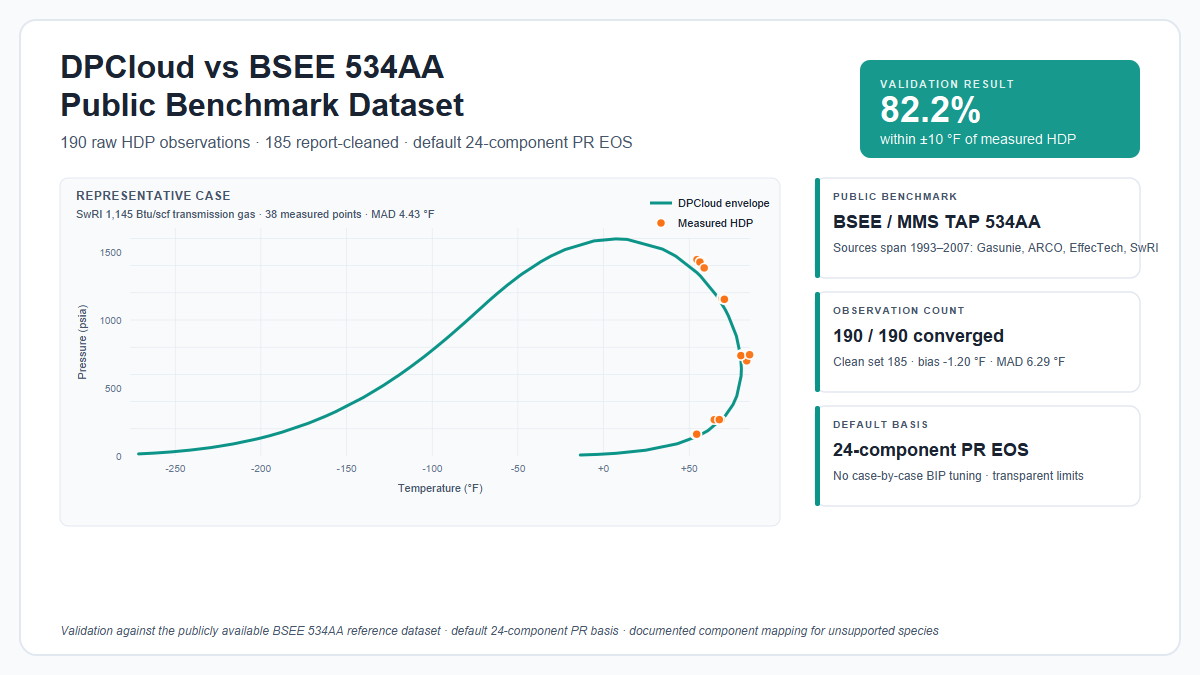
Validating DPCloud Against the BSEE 534AA Public Dew-Point Benchmark
A public benchmark is more useful than a perfect-looking number Hydrocarbon dew-point validation is most useful when the data can be inspected. Private lab comparisons are valuable for project work, but a public benchmark adds a different kind of discipline: readers can see the source, understand the assumptions, and decide whether the comparison is relevant…
-
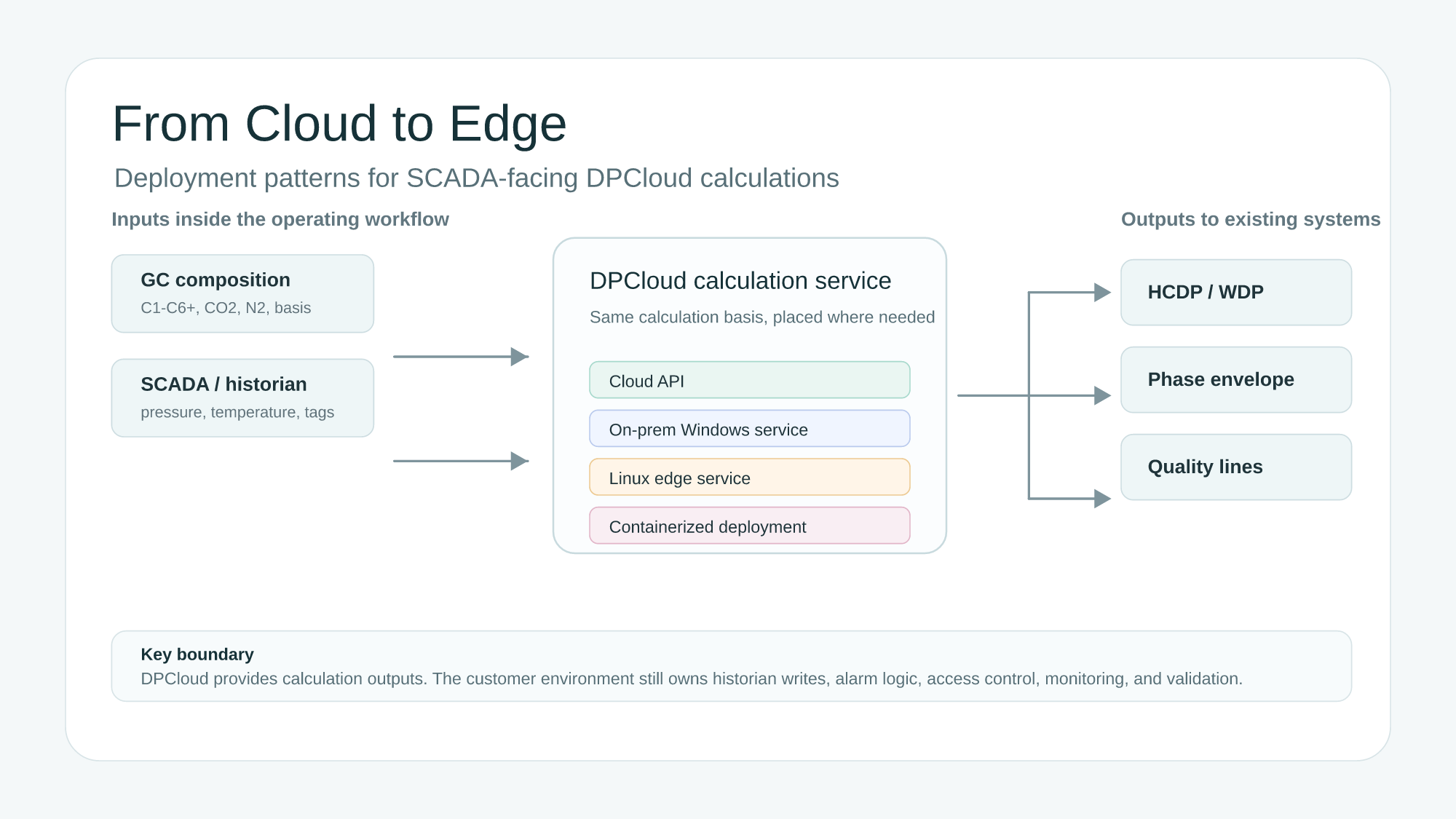
From Cloud to Edge: SCADA Dew Point Calculation Deployment with DPCloud
A SCADA dew point calculation is not only a thermodynamic problem. It is also a deployment problem. Pipeline operators need to know where the calculation runs, which data crosses a network boundary, who owns the service, and how the result becomes part of an operating workflow. That is why DPCloud should not be described as…
-
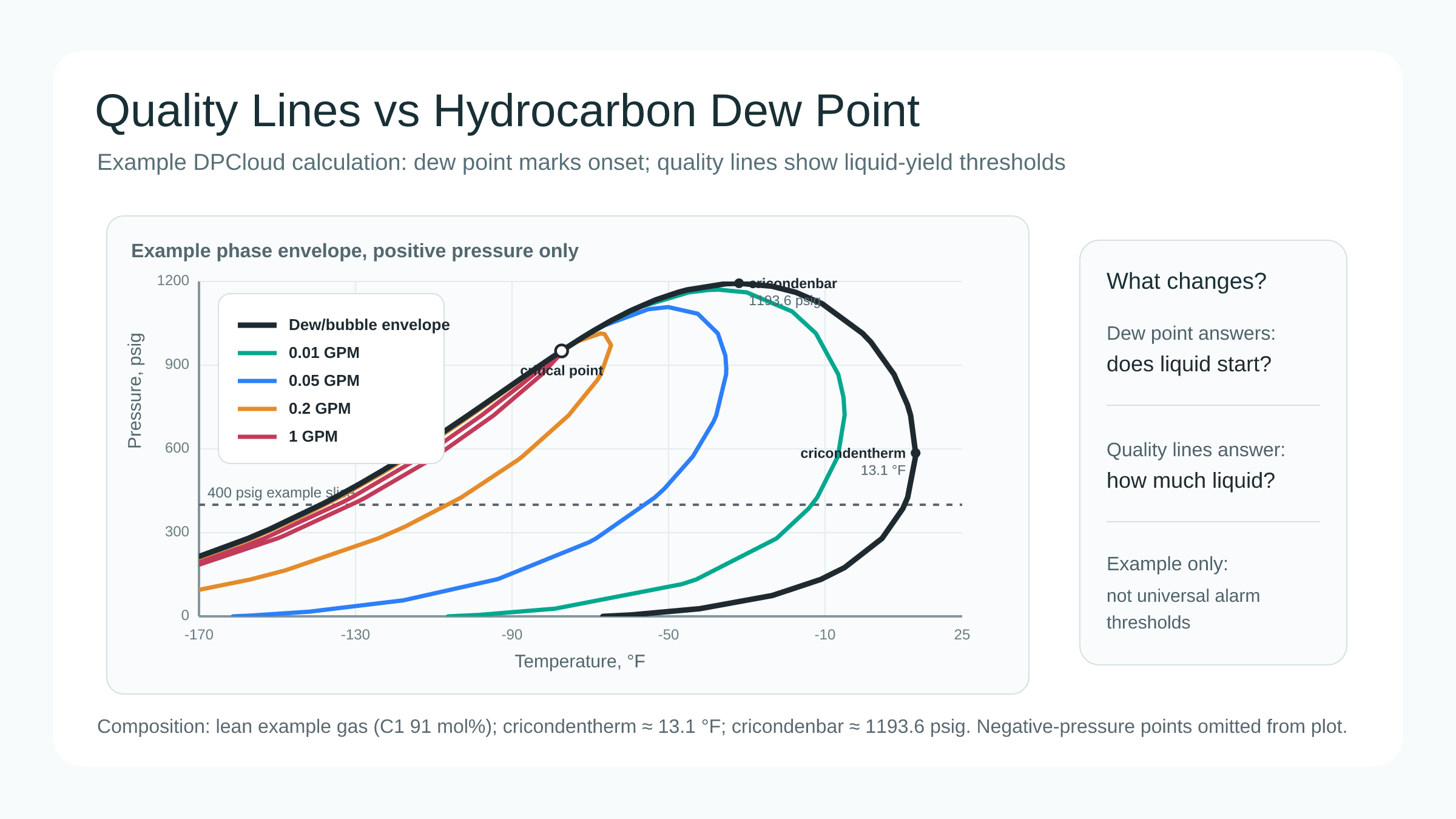
Quality Lines vs Hydrocarbon Dew Point: When “How Much Liquid” Matters More Than “Whether Liquid Starts”
Dew point is an onset line, not a liquid-volume answer Hydrocarbon dew point is often treated as the central number in natural-gas phase behavior. That is reasonable, but incomplete. A dew-point temperature tells an operator when the first hydrocarbon liquid starts to form at a stated pressure. It does not tell the operator how much…
-
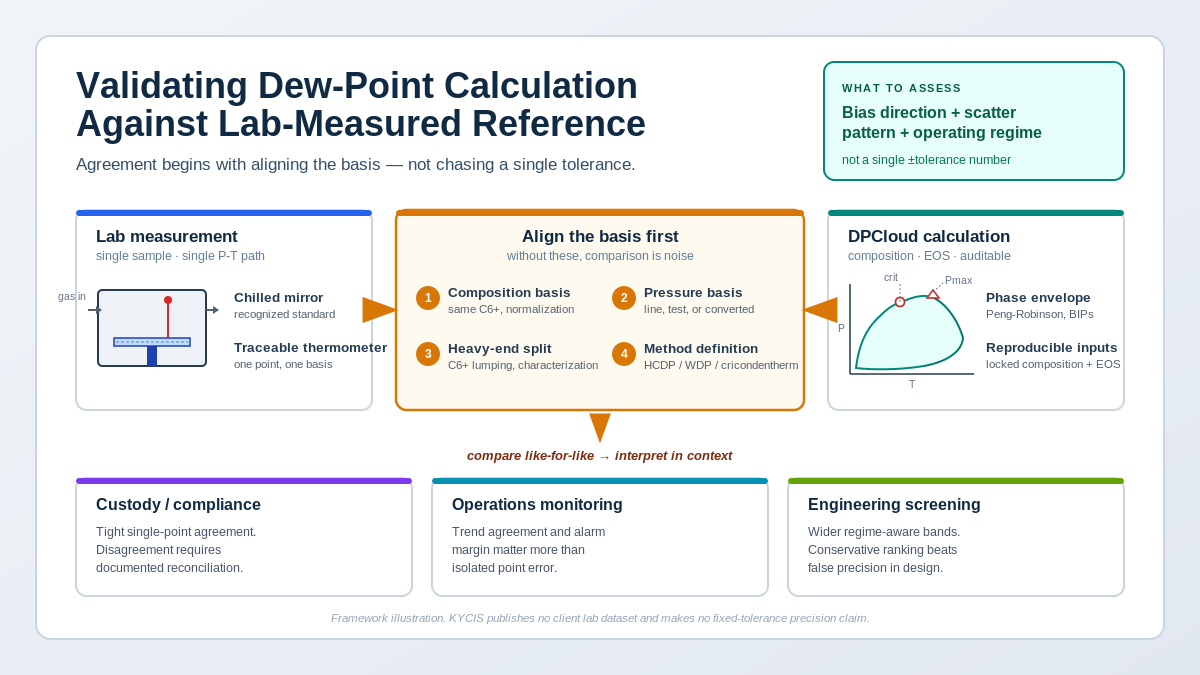
Validating DPCloud Against Lab-Measured Dew Points: What Agreement Really Means
Validation is not a single accuracy number Hydrocarbon dew-point software should not be trusted because a result looks plausible. It should be trusted because the calculation basis can be compared against measured data in a controlled way. For pipeline gas-quality teams, that distinction matters. A dew-point number may influence operating margin, winter risk screening, compressor…
-
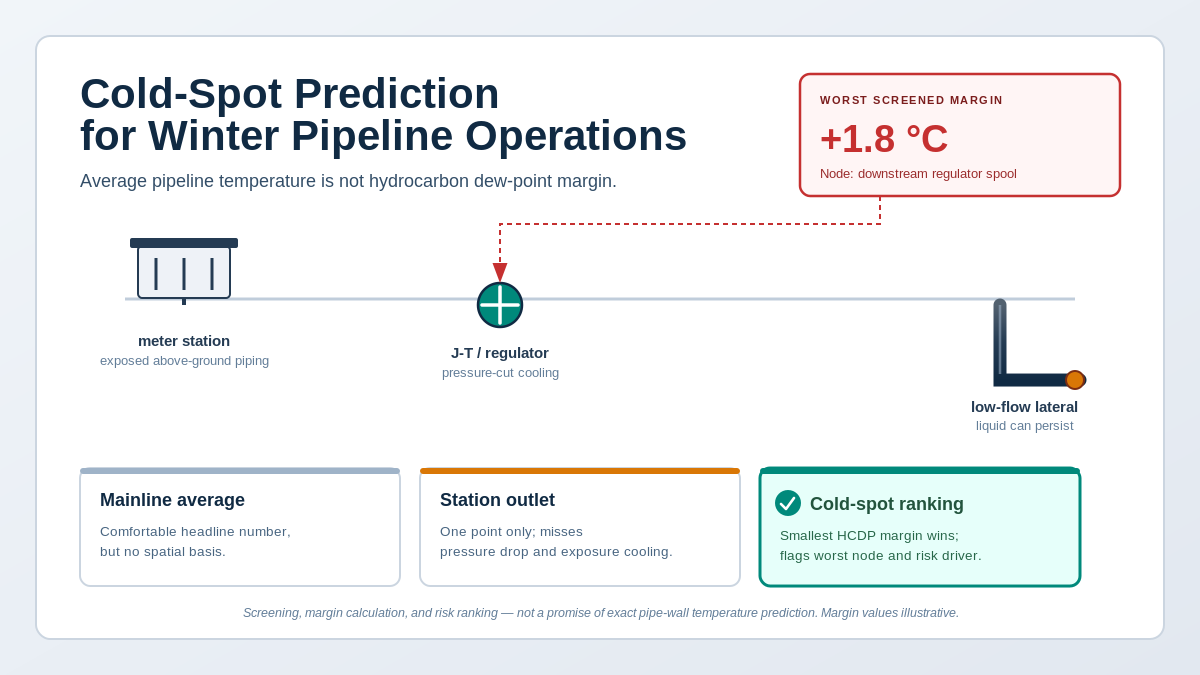
Cold-Spot Prediction: Why Average Pipeline Temperature Is Not Hydrocarbon Dew-Point Margin
Average temperature is not the winter risk Winter dew-point management often starts with a simple question: is the pipeline gas warm enough to stay above its hydrocarbon dew point? That question is useful, but it is incomplete. The number that matters operationally is not the average pipeline temperature. It is not always the station outlet…
-
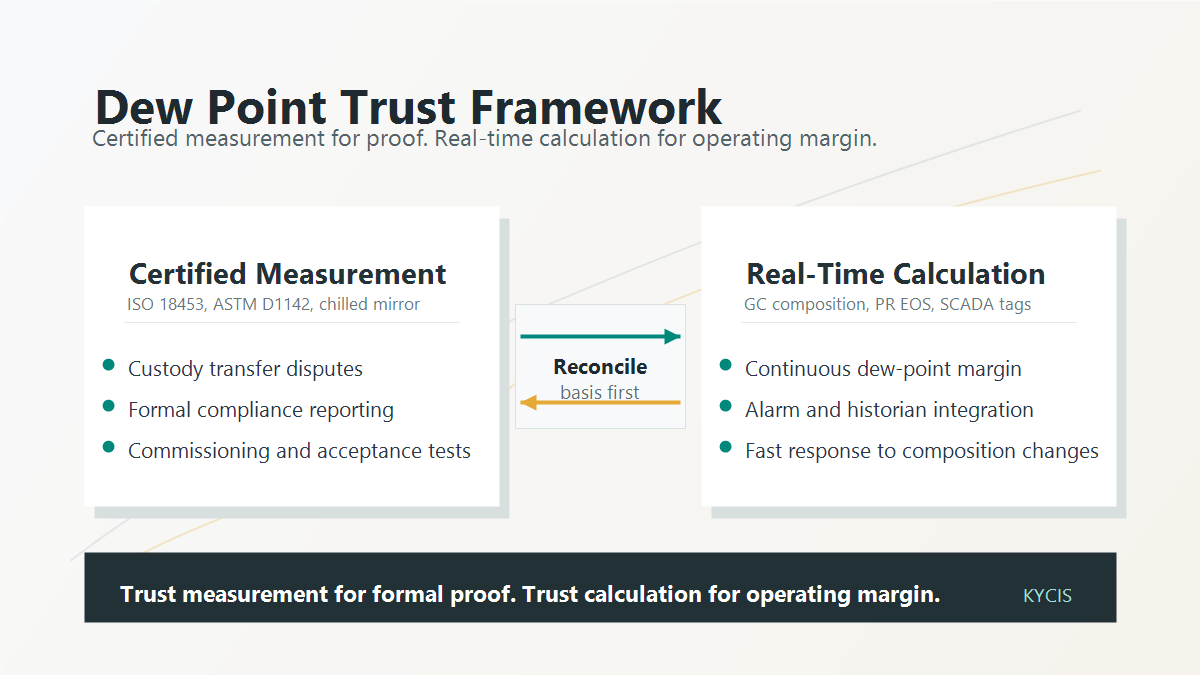
Dew Point Measurement vs Real-Time Calculation: ISO 18453, Chilled Mirrors, and When to Trust Which
A practical framework for when to trust certified dew-point measurement, ISO 18453 correlation, chilled-mirror results, or real-time Peng-Robinson calculation in pipeline gas-quality decisions.
-
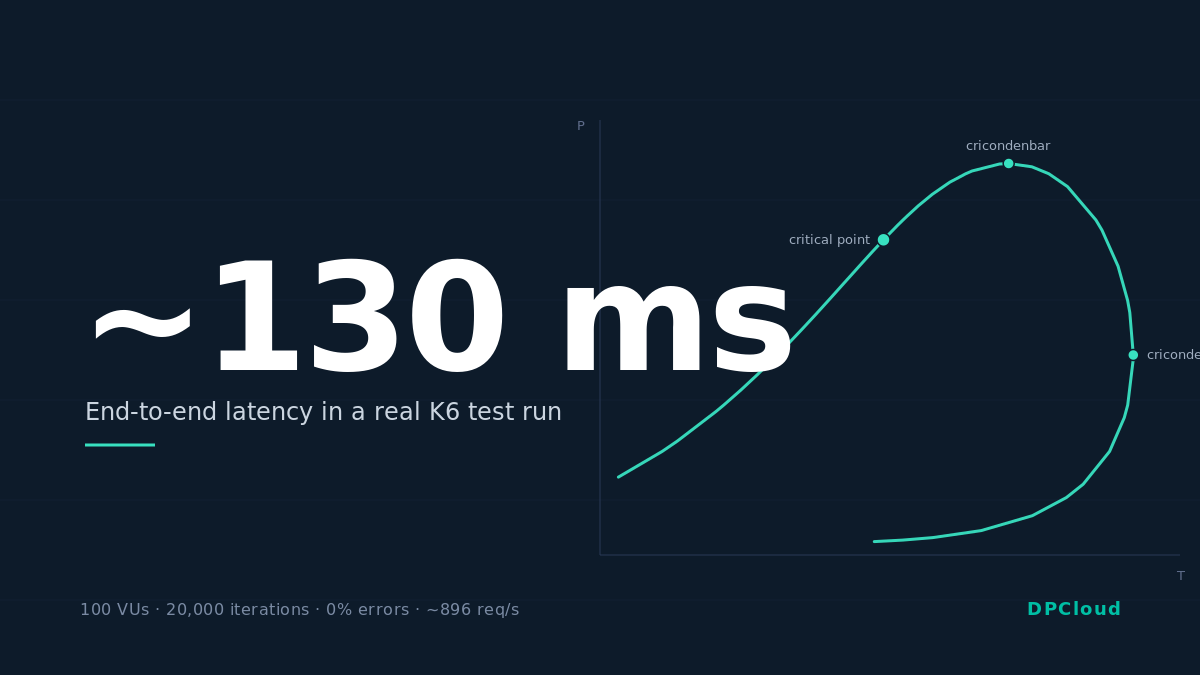
Sub-150 ms Dew Point Calculations: How DPCloud Combines Speed With Numerical Robustness
Inside the engineering choices that let DPCloud run full Peng-Robinson dew point and phase envelope calculations on a 24-component natural gas mixture in roughly 130 ms round trip – fast enough for sub-second SCADA control loops, robust enough for cricondentherm and near-critical operating points.
-
A Step-by-Step Guide to Monitoring Gas Quality with CHDP in Transmission Pipelines
A practical guide to implementing CHDP-based gas quality monitoring in natural gas transmission pipelines — covering measurement strategy, SCADA integration, alarming configuration, and compliance documentation.
-
Comparing Dew Point Calculation Software: Legacy Systems vs. Modern API Approach
How does modern dew point calculation software compare to legacy approaches? This guide evaluates lookup tables, standalone desktop software, OPC-linked engines, and modern REST API services — helping you choose the right solution for your pipeline SCADA.
-
Phase Envelope Calculation Methods: PR vs SRK vs AGA8 for Natural Gas
A technical comparison of the Peng-Robinson (PR), Soave-Redlich-Kwong (SRK), and AGA8 equations of state for natural gas phase envelope and dew point calculations — covering accuracy, application range, and which EOS to choose for SCADA dew point monitoring.
-
How to Integrate Real-Time Dew Point Calculations into Your SCADA System
Step-by-step guide to integrating real-time hydrocarbon dew point calculations into pipeline SCADA systems — covering TCP service, REST API, GC data flow, and practical integration patterns for both legacy and modern architectures.
-
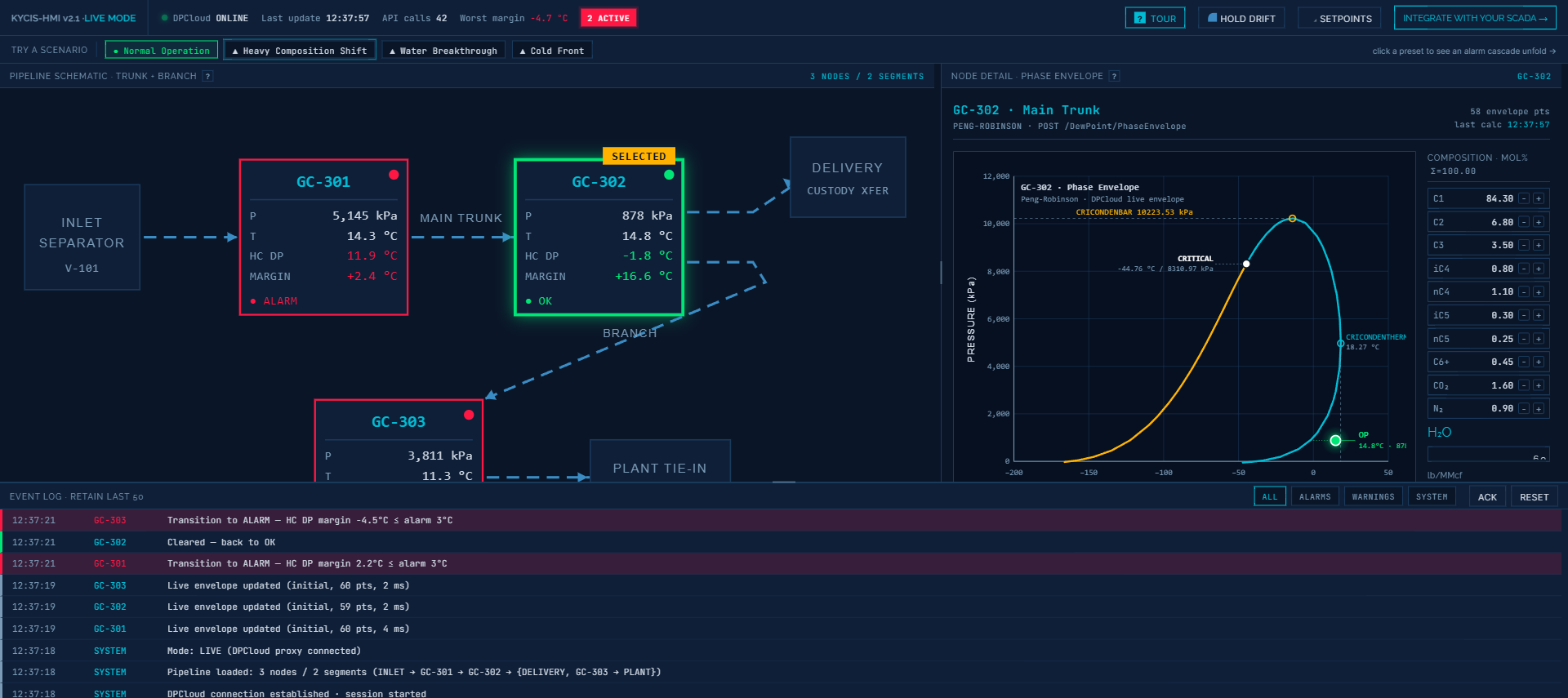
How SCADA Systems Miss Real-Time Dew Point — and What Changes When They Don’t
We shipped an interactive, SCADA-styled demo of real-time hydrocarbon and water dew point calculation. This post walks through what it models, the four control-room scenarios it ships with, and why sub-second phase envelope calculation belongs at the heart of any modern pipeline monitoring stack.