
KYCIS TECHNICAL BLOG
Engineering Insights
Technical articles on dew point calculation, PVT analysis, and oil & gas software engineering — written by the KYCIS team.
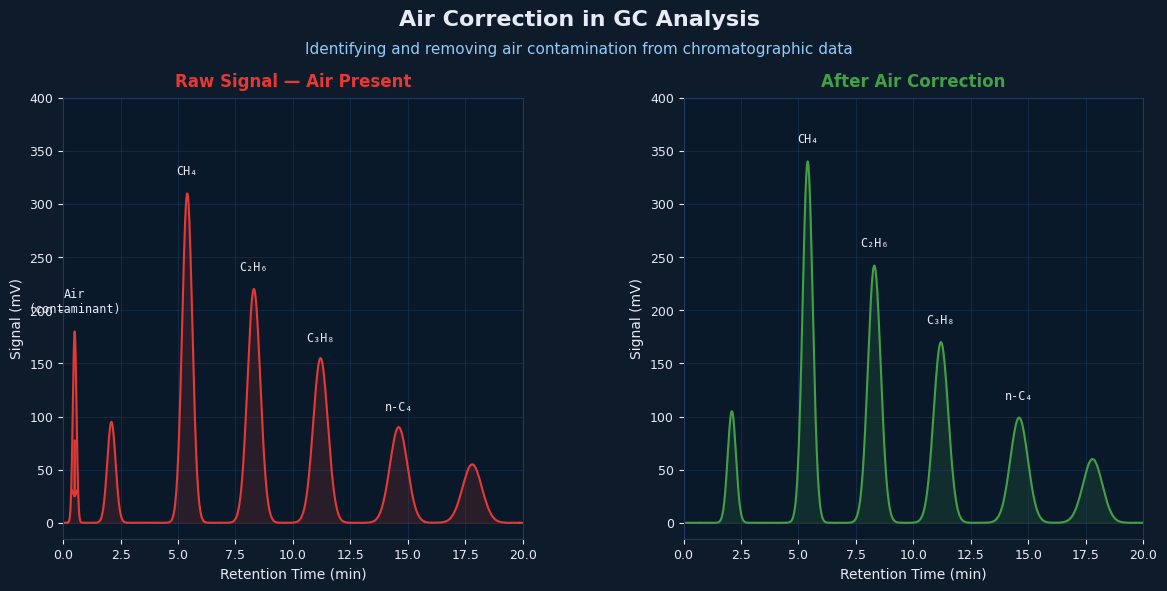
Air Correction in GC Analysis: How to Handle Atmospheric Contamination in Reservoir Fluid Compositions
Air contamination in GC samples inflates nitrogen readings and distorts every normalized component. Here’s how to identify it, calculate the correction, and apply it correctly.
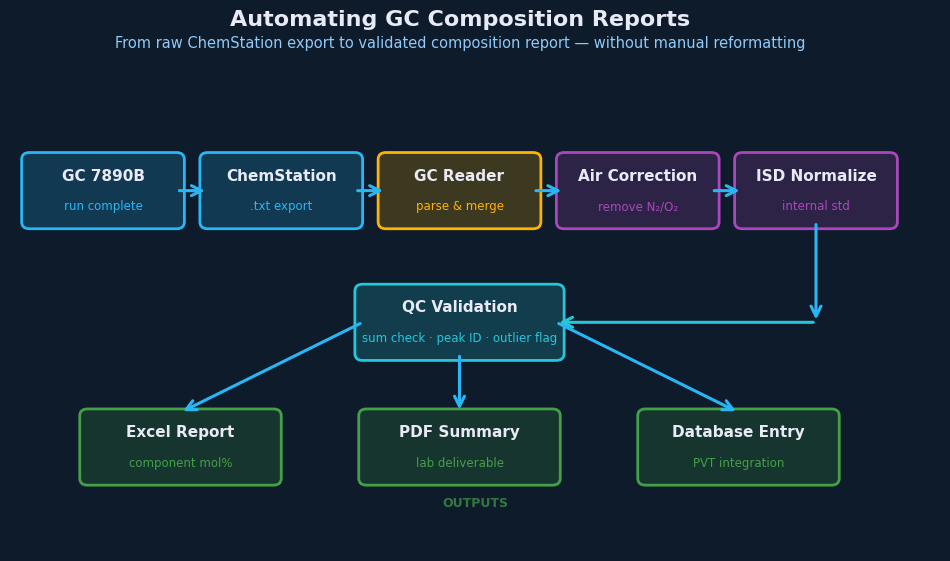
Automating GC Composition Reports: From ChemStation to Engineering Software
Most PVT labs still process GC data manually in Excel. Here’s what full automation looks like — from raw ChemStation CSV to engineering-ready compositions — and what it takes to get there.
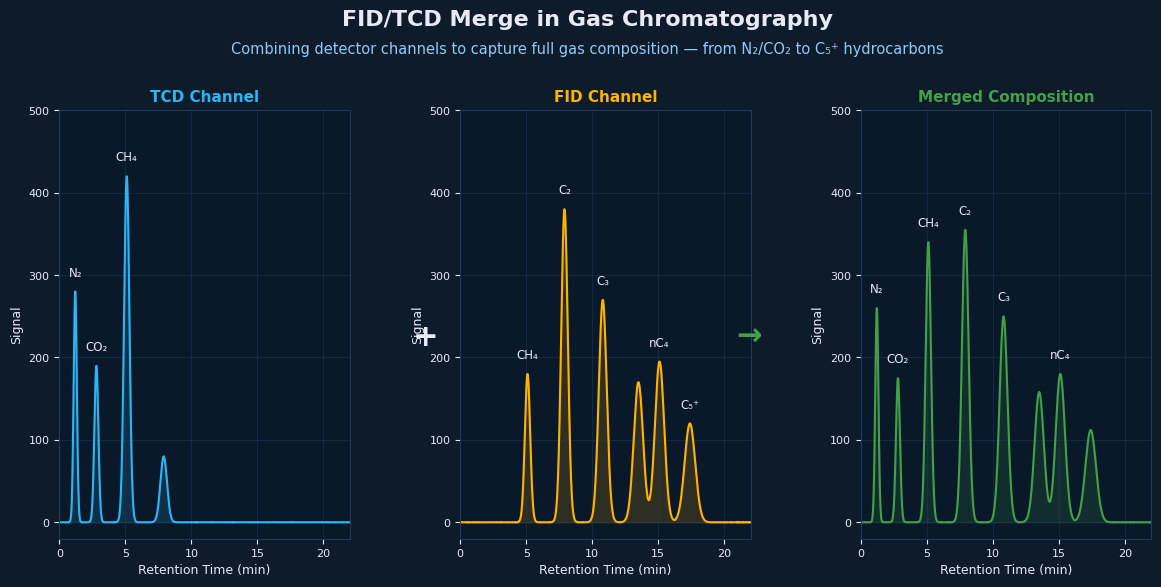
FID/TCD Merge in Gas Chromatography: Why Your Composition Numbers Are Wrong
Dual-detector GC systems run FID and TCD on the same sample — but combining their results correctly requires more than just copy-pasting columns. Here’s what the merge actually involves.
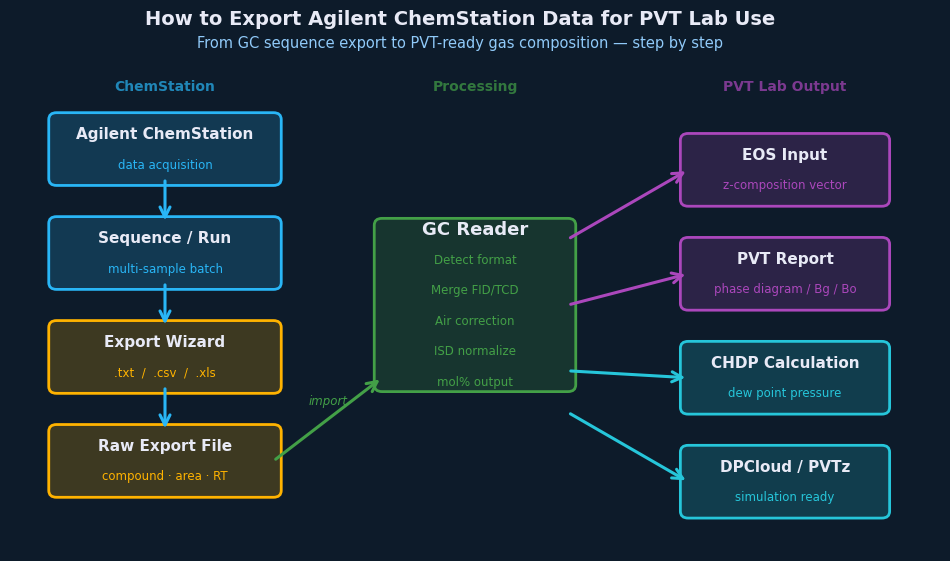
How to Export Agilent ChemStation Data for PVT Lab Use
Step-by-step guide to exporting Agilent ChemStation data as CSV for PVT analysis. Covers report templates, common export errors, and how to prepare GC output for engineering workflows.
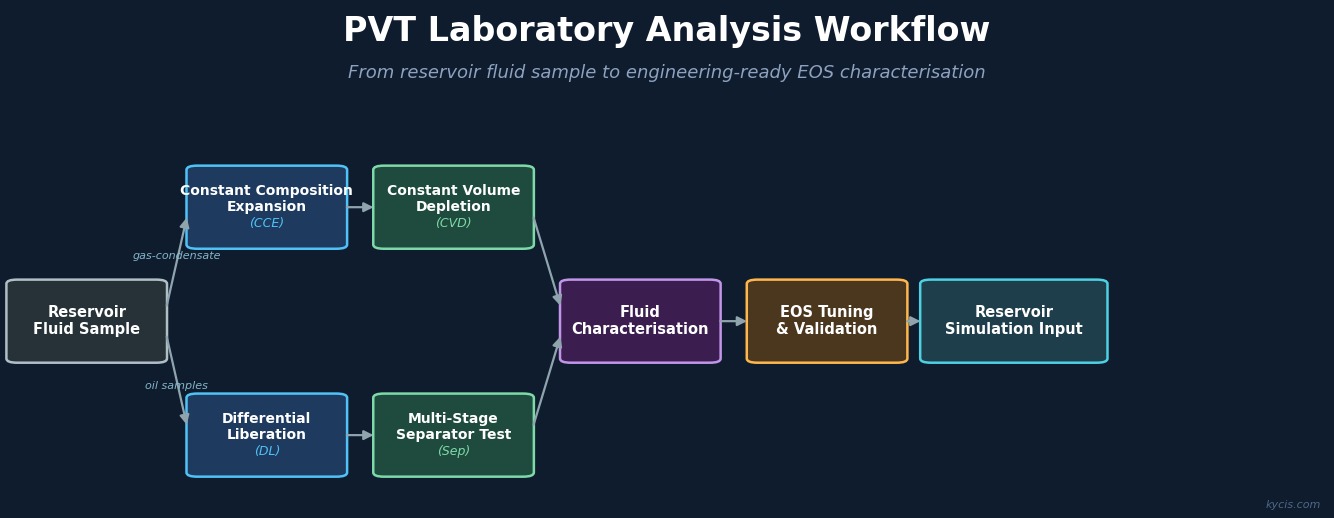
What Is PVT Analysis and Why Does It Matter for Reservoir Engineering?
PVT analysis — Pressure-Volume-Temperature laboratory testing of reservoir fluids — is a cornerstone of reservoir engineering. This guide explains what PVT analysis is, what experiments are performed, and how the data is used in reservoir simulation and production planning.
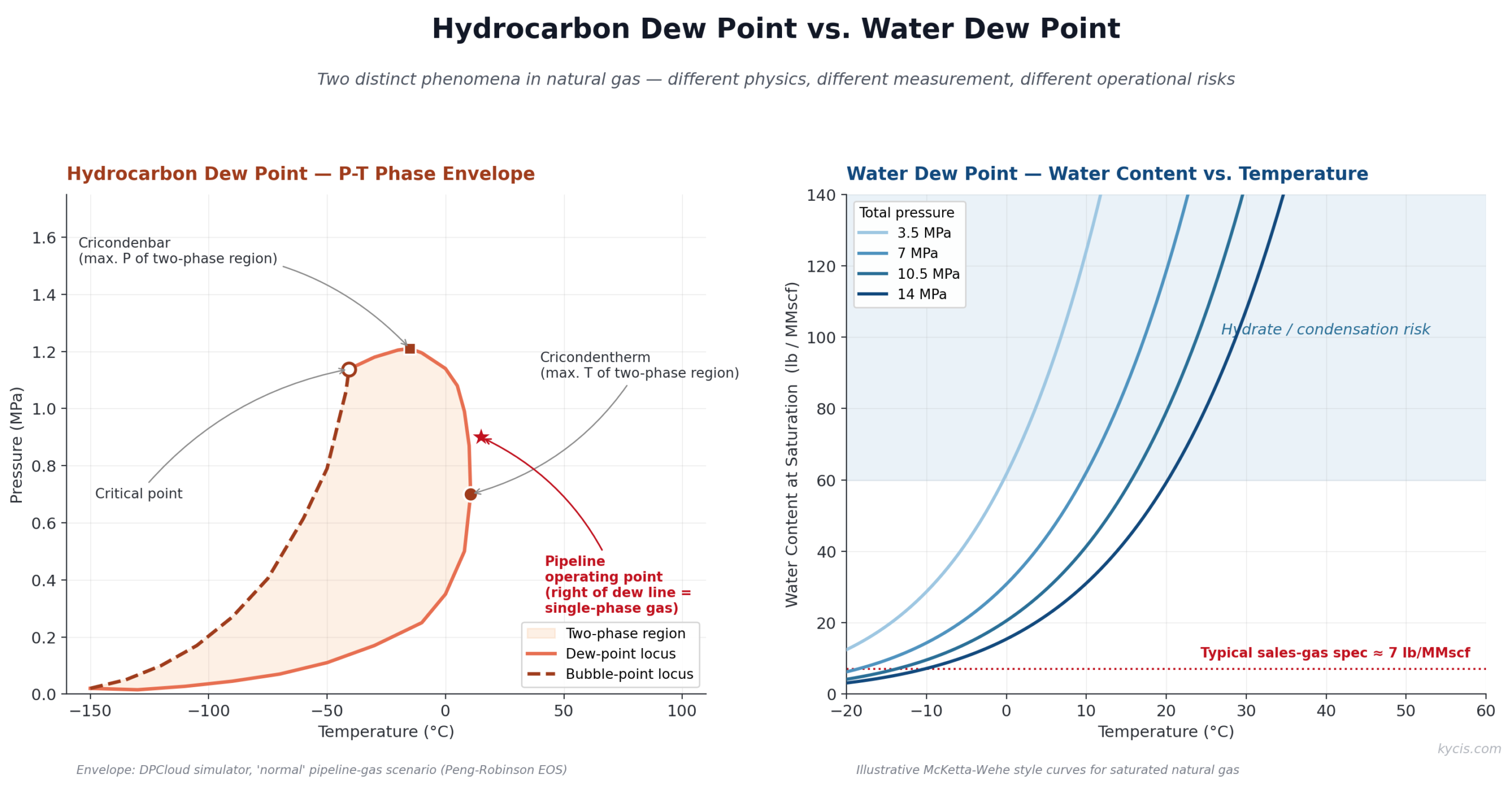
Hydrocarbon Dew Point vs. Water Dew Point: A Practical Guide for Gas Engineers
Hydrocarbon dew point and water dew point are both critical gas quality parameters, but they are governed by different thermodynamics and require different measurement and calculation approaches. This guide explains the key differences and how to monitor both in pipeline operations.
What Is Cricondentherm Hydrocarbon Dew Point and Why It Matters for Pipeline Operations
The cricondentherm hydrocarbon dew point (CHDP) is the highest temperature at which a natural gas mixture can form liquid hydrocarbons. Learn why accurate CHDP measurement is critical for pipeline operations, SCADA systems, and gas quality compliance.