
KYCIS TECHNICAL BLOG
Engineering Insights
Technical articles on dew point calculation, PVT analysis, and oil & gas software engineering — written by the KYCIS team.
-
A Step-by-Step Guide to Monitoring Gas Quality with CHDP in Transmission Pipelines
A practical guide to implementing CHDP-based gas quality monitoring in natural gas transmission pipelines — covering measurement strategy, SCADA integration, alarming configuration, and compliance documentation.
-
Comparing Dew Point Calculation Software: Legacy Systems vs. Modern API Approach
How does modern dew point calculation software compare to legacy approaches? This guide evaluates lookup tables, standalone desktop software, OPC-linked engines, and modern REST API services — helping you choose the right solution for your pipeline SCADA.
-
Phase Envelope Calculation Methods: PR vs SRK vs AGA8 for Natural Gas
A technical comparison of the Peng-Robinson (PR), Soave-Redlich-Kwong (SRK), and AGA8 equations of state for natural gas phase envelope and dew point calculations — covering accuracy, application range, and which EOS to choose for SCADA dew point monitoring.
-
How to Integrate Real-Time Dew Point Calculations into Your SCADA System
Step-by-step guide to integrating real-time hydrocarbon dew point calculations into pipeline SCADA systems — covering TCP service, REST API, GC data flow, and practical integration patterns for both legacy and modern architectures.
-
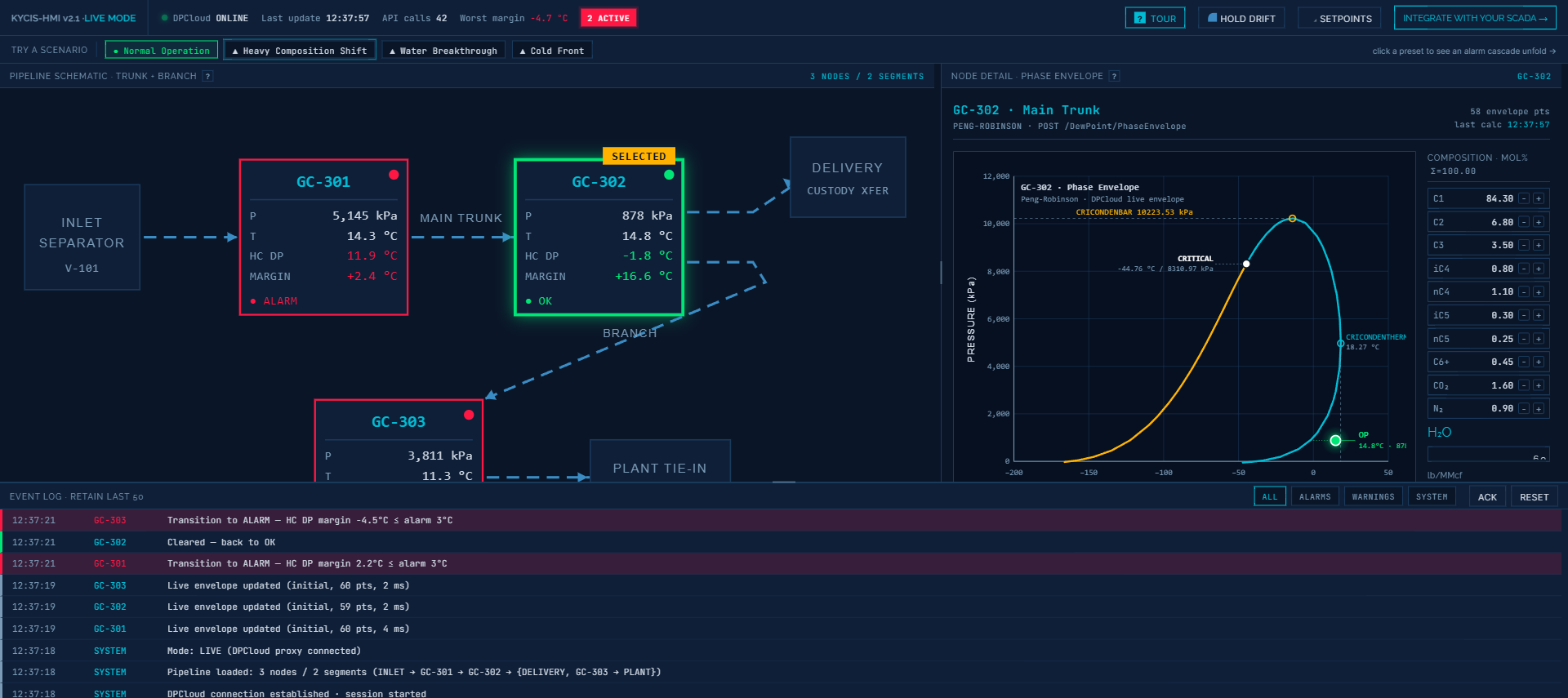
How SCADA Systems Miss Real-Time Dew Point — and What Changes When They Don’t
We shipped an interactive, SCADA-styled demo of real-time hydrocarbon and water dew point calculation. This post walks through what it models, the four control-room scenarios it ships with, and why sub-second phase envelope calculation belongs at the heart of any modern pipeline monitoring stack.
-
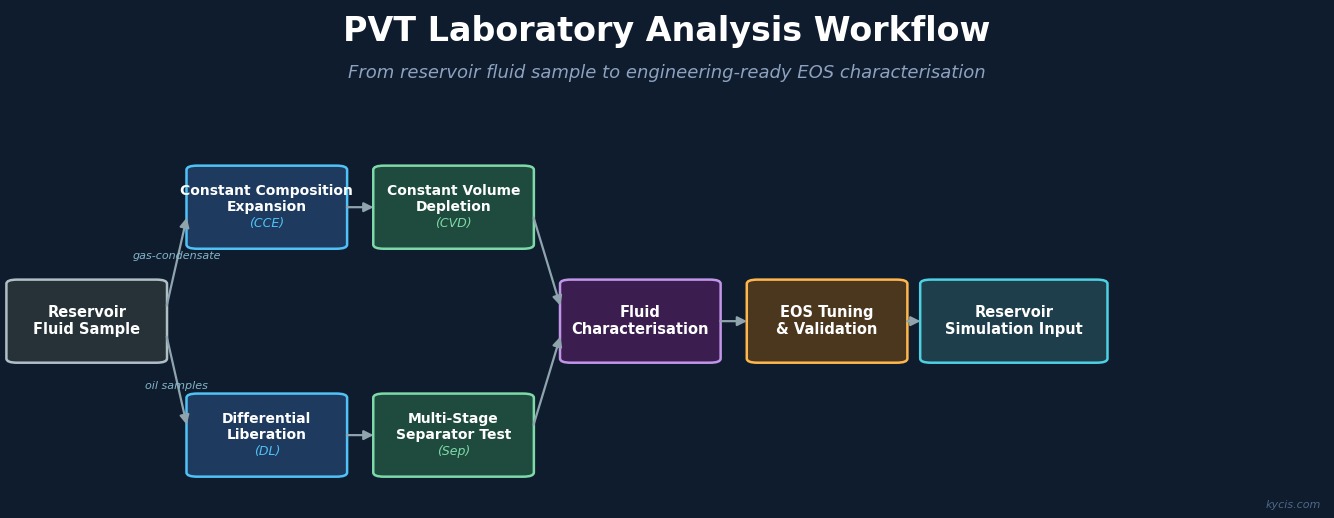
The PVT Lab GC Workflow: From Wellsite Sample to Engineering Software
A complete map of the PVT lab GC workflow — from wellsite sampling through ChemStation processing to engineering software — with the decision points that determine data quality at each stage.
-
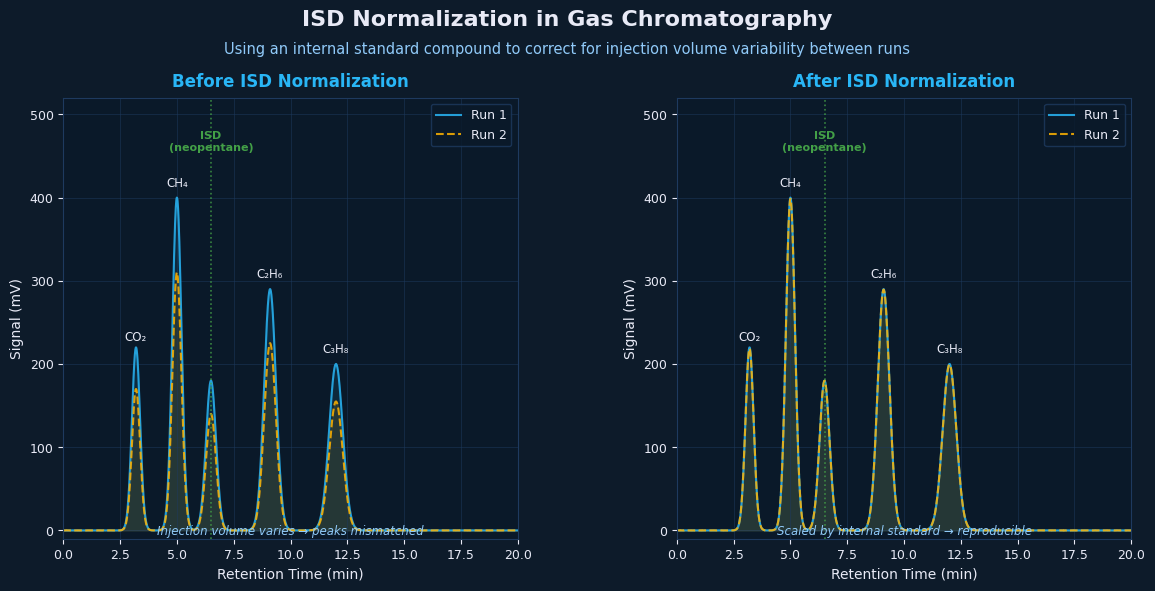
ISD Normalization in Gas Chromatography: What It Is and Why It Matters
Internal standard normalization corrects for injection volume variation and instrument drift before you calculate mole fractions. Here’s how it works and what goes wrong when it’s applied incorrectly.
-
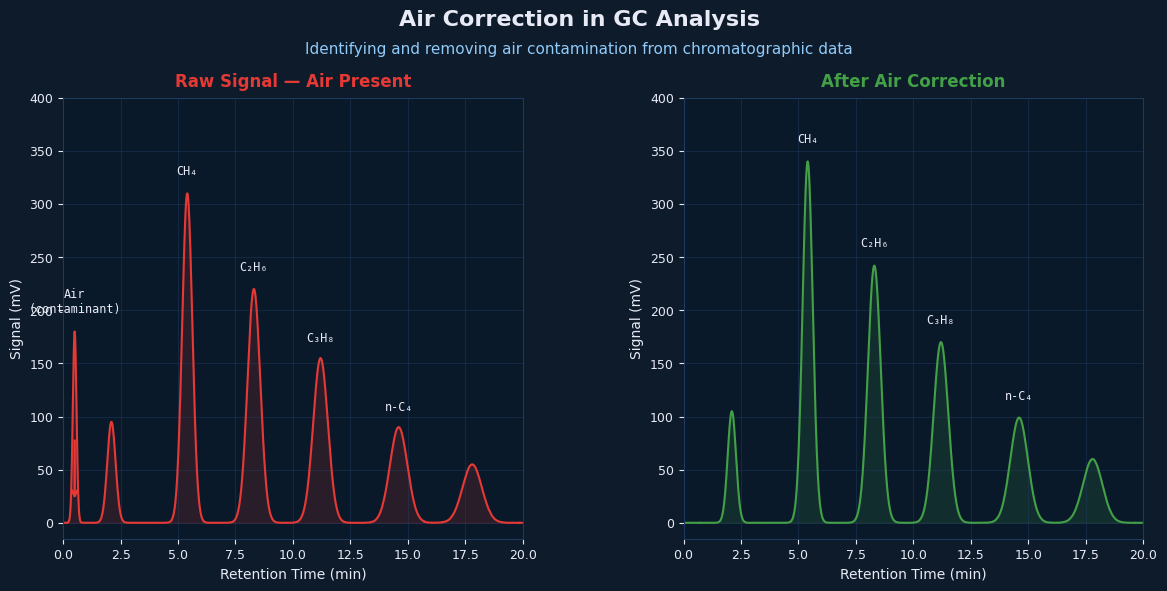
Air Correction in GC Analysis: How to Handle Atmospheric Contamination in Reservoir Fluid Compositions
Air contamination in GC samples inflates nitrogen readings and distorts every normalized component. Here’s how to identify it, calculate the correction, and apply it correctly.
-
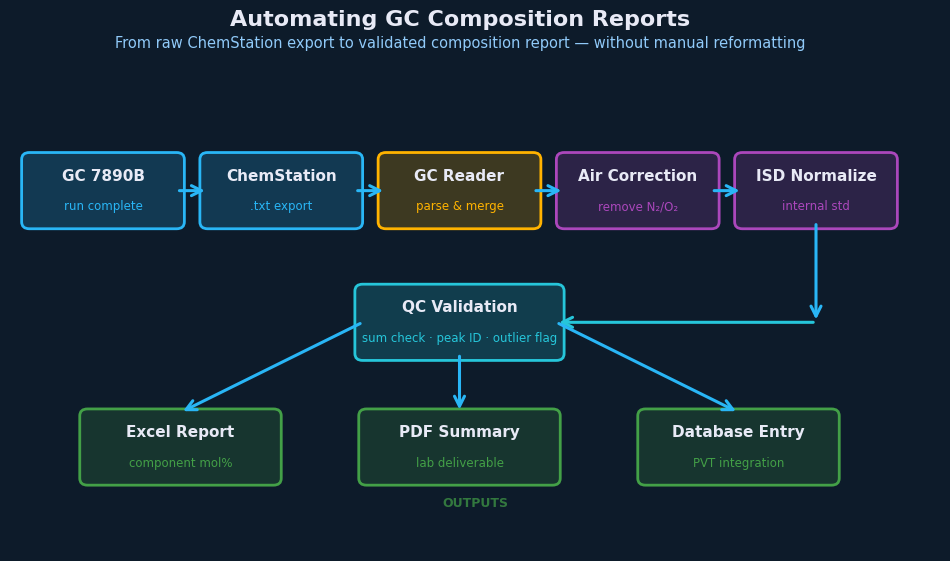
Automating GC Composition Reports: From ChemStation to Engineering Software
Most PVT labs still process GC data manually in Excel. Here’s what full automation looks like — from raw ChemStation CSV to engineering-ready compositions — and what it takes to get there.
-
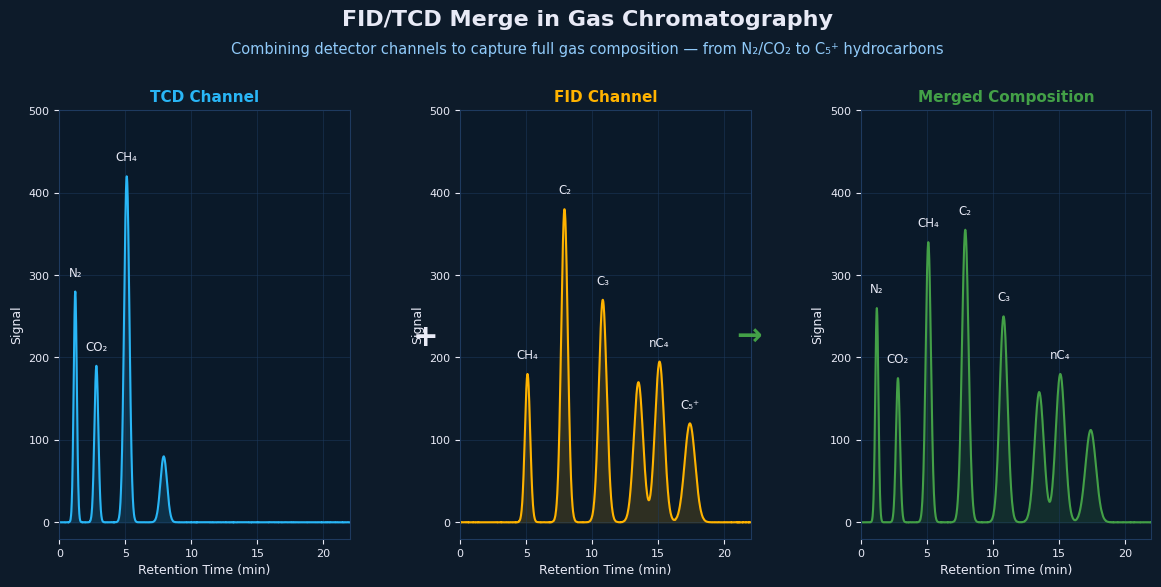
FID/TCD Merge in Gas Chromatography: Why Your Composition Numbers Are Wrong
Dual-detector GC systems run FID and TCD on the same sample — but combining their results correctly requires more than just copy-pasting columns. Here’s what the merge actually involves.
-
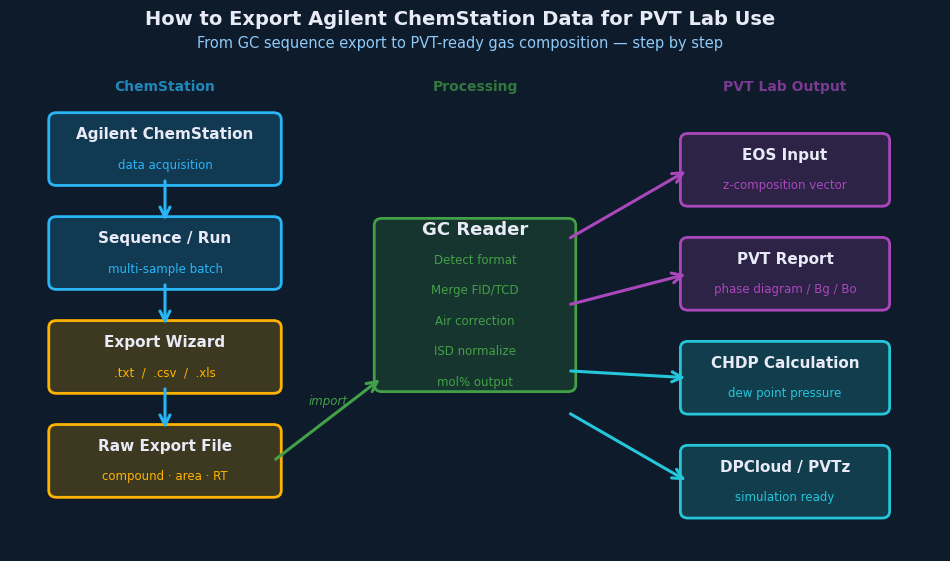
How to Export Agilent ChemStation Data for PVT Lab Use
Step-by-step guide to exporting Agilent ChemStation data as CSV for PVT analysis. Covers report templates, common export errors, and how to prepare GC output for engineering workflows.
-
What Is PVT Analysis and Why Does It Matter for Reservoir Engineering?
PVT analysis — Pressure-Volume-Temperature laboratory testing of reservoir fluids — is a cornerstone of reservoir engineering. This guide explains what PVT analysis is, what experiments are performed, and how the data is used in reservoir simulation and production planning.